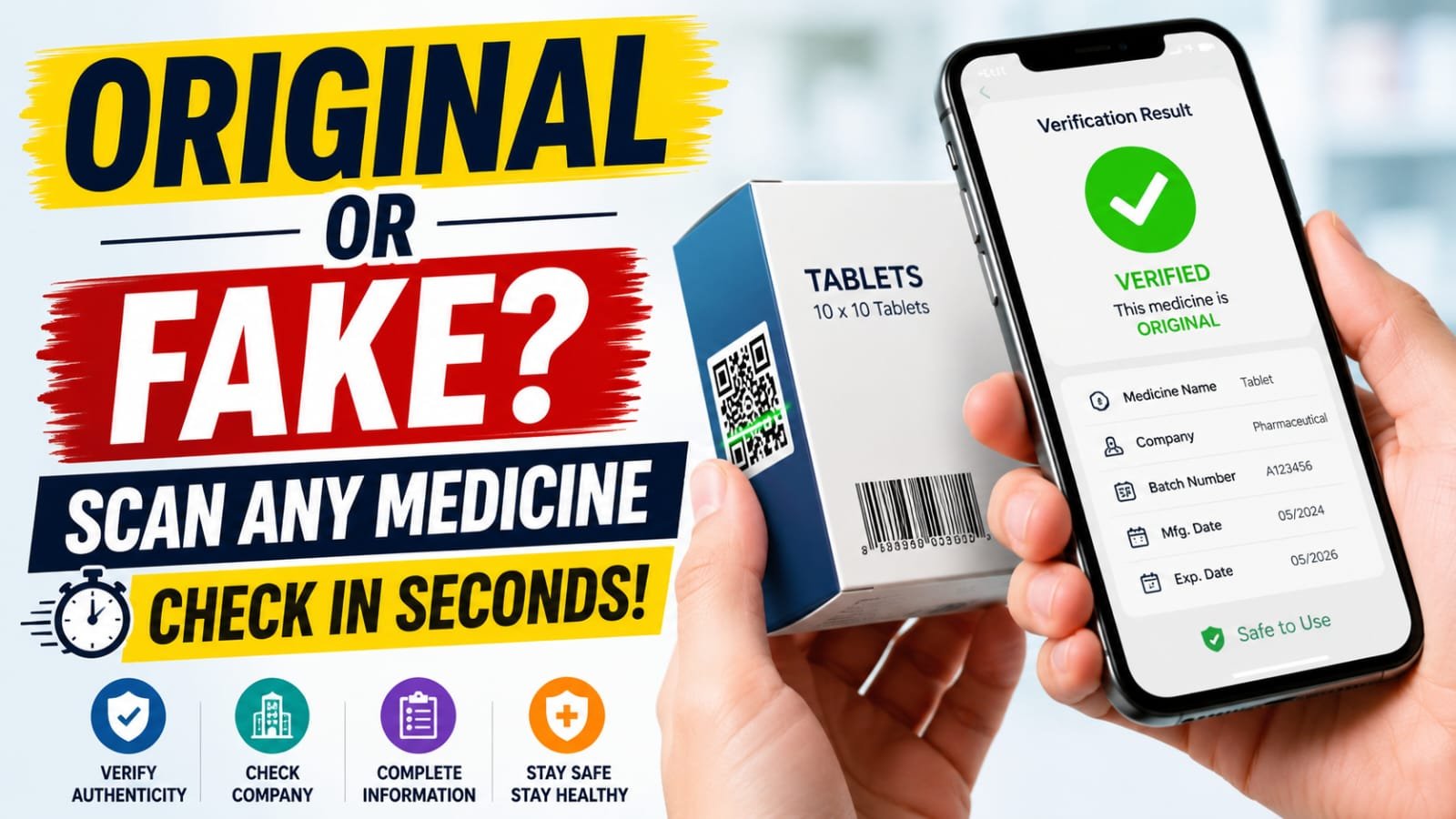

Counterfeit medicines have become a growing global concern, especially as online pharmacies and digital healthcare platforms continue to expand. In 2026, buying medication online is more convenient than ever but it also comes with risks. A fake medicine may contain incorrect ingredients, the wrong dosage, or even harmful substances that can seriously affect your health.
The good news is that modern verification tools make it easier to confirm whether a medicine is genuine. This guide explains how to check if a medicine is original or fake online and what steps you should take before purchasing or using any medication.
Why Fake Medicines Are a Serious Problem
Counterfeit drugs are designed to look like genuine products. Some fake medicines imitate packaging, branding, and labeling so closely that consumers may not notice the difference.
Using counterfeit medication can lead to:
- Treatment failure
- Unexpected side effects
- Drug resistance (especially with antibiotics)
- Serious health complications
- Financial loss
As online medicine purchases increase, verifying authenticity has become an essential safety step.
How to Check if a Medicine Is Original or Fake Online
1. Verify the Manufacturer’s Details
Start by examining the medicine packaging carefully.
Check for:
- Manufacturer name
- Manufacturing date
- Expiry date
- Batch or lot number
- Drug registration number
Visit the manufacturer’s official website and compare the product information with what appears on the package. Many pharmaceutical companies now provide online verification tools where users can enter a batch number to confirm authenticity.
2. Scan the QR Code or Security Label
In 2026, most legitimate pharmaceutical products include advanced security features such as:
- QR codes
- Data Matrix codes
- Tamper-evident seals
- Holograms
- NFC verification tags
Scan the QR code using your smartphone camera or the manufacturer’s verification app. Genuine products often redirect users to an official verification page displaying product details and authenticity status.
If the QR code leads to a suspicious website or does not work, proceed with caution.
3. Check the Batch Number Online
Many health authorities and pharmaceutical companies maintain online databases where consumers can verify medicine batches.
Compare:
- Batch number
- Product name
- Manufacturing information
- Expiration details
If the batch number is missing, duplicated, or does not match official records, the medicine may be counterfeit.
4. Buy Only from Licensed Online Pharmacies
One of the easiest ways to avoid fake medicines is to purchase only from licensed and regulated pharmacies.
A trustworthy online pharmacy should:
- Display licensing information
- Require prescriptions for prescription drugs
- Provide contact information and physical address
- Offer customer support
- Use secure payment systems
Be cautious of websites selling prescription medications without requiring a prescription. Extremely low prices can also be a warning sign.
Warning Signs of a Fake Medicine
Packaging Looks Different
Counterfeit products often have subtle packaging issues such as:
- Misspelled words
- Poor print quality
- Blurry logos
- Incorrect colors
- Damaged seals
Compare the package with images from the manufacturer’s official website whenever possible.
Price Is Too Good to Be True
If a medicine costs significantly less than its normal market price, there may be a reason.
For example, if a branded medication typically costs $50 but is being sold online for $5, the product should be investigated carefully before purchase.
Missing Verification Features
Modern pharmaceutical products frequently include security features. Missing holograms, QR codes, or authentication labels may indicate a counterfeit product.
Unusual Appearance of the Medicine
Inspect the medicine itself.
Look for:
- Different color
- Different shape
- Strange odor
- Crumbling tablets
- Damaged capsules
Any unusual characteristic should raise concern.
Useful Online Tools for Drug Verification
Official Manufacturer Verification Systems
Many pharmaceutical companies provide online authenticity-check platforms. Users can enter a serial number or scan a product code to verify legitimacy.
Government Drug Databases
National drug regulatory agencies often maintain databases that allow consumers to verify registered medicines and manufacturers.
These databases can help confirm:
- Product approval status
- Registration information
- Manufacturer details
- Safety alerts
Mobile Authentication Apps
Several countries have adopted mobile verification systems that allow consumers to authenticate medicines using SMS, QR scanning, or dedicated apps.
These systems provide near-instant verification and are becoming increasingly common in 2026.
Best Practices for Safe Online Medicine Purchases
To reduce the risk of receiving counterfeit drugs:
- Buy from licensed pharmacies only.
- Verify packaging and security features.
- Check batch numbers online.
- Scan QR codes before use.
- Keep receipts and purchase records.
- Avoid social media sellers offering medicines without verification.
- Consult a healthcare professional if something appears suspicious.
What to Do If You Suspect a Medicine Is Fake
If you believe a medicine may be counterfeit:
- Stop using it immediately unless instructed otherwise by a healthcare provider.
- Contact the manufacturer.
- Report the product to your country’s drug regulatory authority.
- Inform the pharmacy or seller.
- Seek medical advice if you experience unusual symptoms.
Quick reporting helps protect other consumers and assists authorities in removing counterfeit products from the market.
Conclusion
Knowing how to check if a medicine is original or fake online is an essential skill in 2026. By verifying manufacturer details, scanning QR codes, checking batch numbers, and purchasing only from licensed pharmacies, you can significantly reduce the risk of counterfeit medications.